Is it better to buy a stock before or after earnings? What price-reaction data shows
Market analytics · · 4 min
Is it better to buy before or after earnings? There is no universal rule. In Sufics measurements of 136 US company reports (snapshot of 23 October 2026), the median 48-hour price move after a report was 6.2% in either direction, and the price followed the surprise in only 46% of 125 cases: the size of the move is more predictable than its direction.
By Viktor Skrin
In short: before the report, after it, or leave it alone
| Option | What you get | What you risk |
|---|---|---|
| Buy before earnings | you take part in the move after the numbers come out | the move can be large in either direction, and its direction is hard to guess |
| Buy after earnings | you know the numbers, the company's guidance and the market's first reaction | part of the move has already happened, and the reaction may continue or reverse |
| Leave the position unchanged | the decision does not hinge on a single day | you carry the usual earnings risk of that stock |
Is it better to buy a stock before or after earnings?
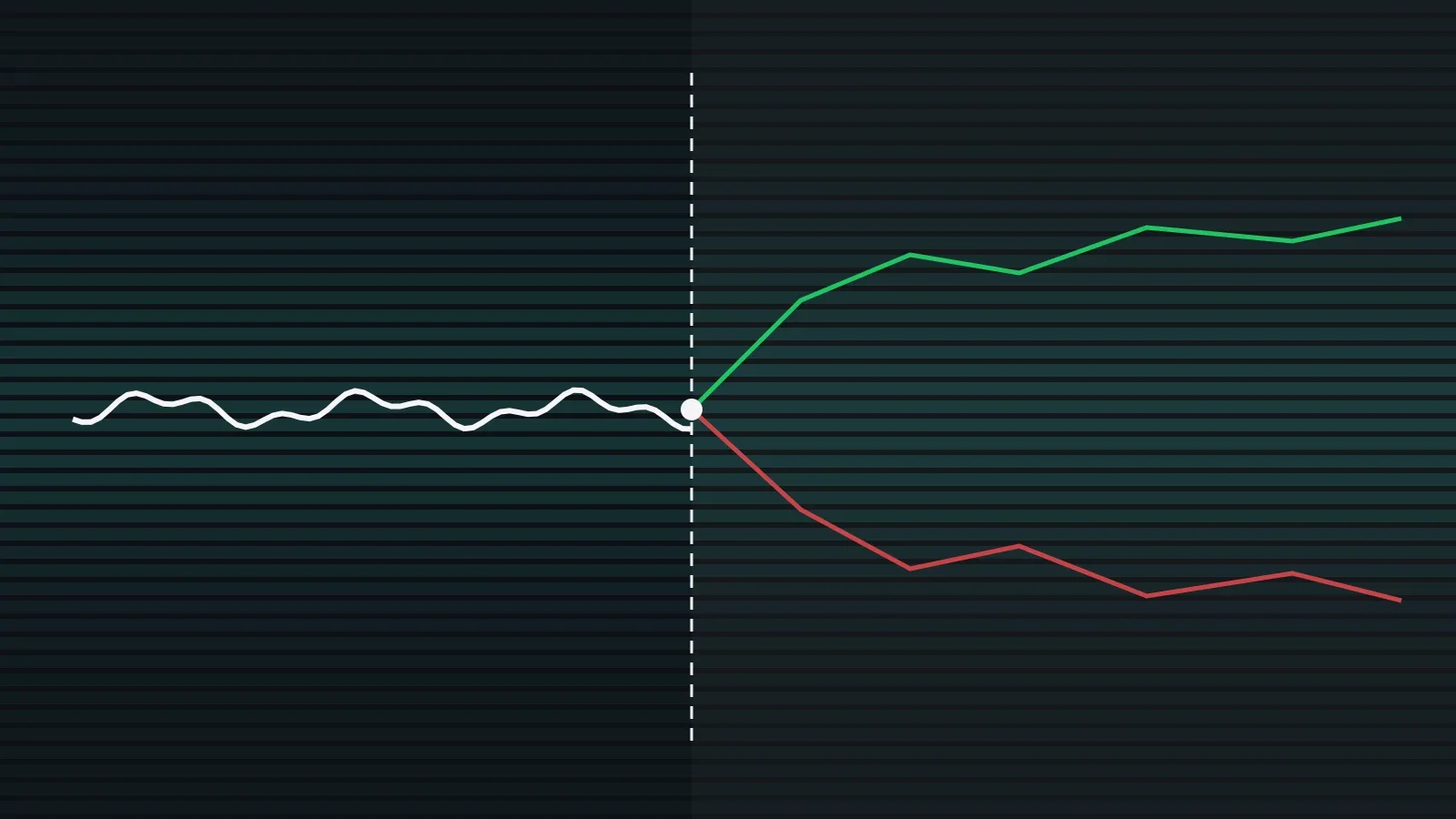
There is no universal answer, and the measurements show why. An earnings report is an event after which a stock usually moves more than on an ordinary day. Buying before the report is a bet on the direction of that move. Buying after it means giving up the bet in exchange for missing the first part of the move.
If you decided to buy for reasons unrelated to the report itself, the "before or after" question is really about position size: how much you are willing to hold on a day when the price can move several percent overnight.
What do measurements of price reactions to earnings show?
The Sufics earnings calendar measures how prices reacted to past reports of US companies. Method: the price change over the 48 hours after the report is released — from 07:00 New York time for reports before the open, from 16:30 for reports after the close. Prices come from hourly candles of Binance perpetual contracts on these stocks: they trade around the clock, so the reaction is visible even at night when the US exchange is closed.
Snapshot of 23 October 2026:
| Measure | Value | Reports |
|---|---|---|
| Median 48-hour price move, in either direction | 6.2% | 136 |
| Share of cases where the price moved in the direction of the surprise (up after a beat, down after a miss) | 46% | 125 |
The takeaway from these two rows: the size of the post-earnings move is more predictable than its direction. Even knowing whether a company beat the earnings-per-share forecast gave the direction in less than half of the cases in this sample.
Examples from the same table of recent reports (page data as of 23 October 2026): Netflix on 20 October beat the EPS forecast by about 6%, yet its price fell 2.3% over 48 hours; JPMorgan on 13 October came in below the forecast, yet its price rose 4.4%. These are single cases, not a rule.
Why can a stock fall after a strong report?
Before the report, the stock price already contains the market's expectations. If earnings beat the analysts' consensus but investors hoped for more, or the company cut its guidance for the next quarter, the stock can fall even after a "good" report. The market reacts to guidance about the future at least as much as to the past quarter, so a single EPS number says little about direction.
What is the 3 day rule after earnings?
The "3 day rule" appears in trader discussions as advice to wait a few days after a report, until the first reaction settles, before deciding. It is an informal habit of some traders, not a regulator's rule. The official rule about days on the US stock market concerns trade settlement: the US Securities and Exchange Commission shortened the standard settlement cycle to one business day (T+1) from 28 May 2024 (adopted 15 February 2023, checked 23 October 2026). It has nothing to do with when to buy.
How to use an earnings calendar before buying?
- Check the report date and timing: before the market opens (BMO) or after it closes (AMC). This sets when the price can react.
- Look at how much this stock moved on past reports: that tells you what range is normal.
- Size the position so that a typical earnings move against you is bearable for the account.
- Do not base the decision on guessing direction: in our measurements it is close to a coin toss.
Investing in stocks carries the risk of losing money, and a past price reaction does not guarantee the same next time. This article describes measurements and is not investment advice.
Key takeaways
- Buying before earnings is a bet on the direction of the move; buying after means missing its first part.
- In Sufics data the median 48-hour move after a report is 6.2% in either direction (136 reports, snapshot of 23 October 2026).
- The price followed the surprise in 46% of 125 cases: direction is close to a coin toss.
- The "3 day rule" is an informal trader habit, not a regulator's rule.
- Position size before earnings matters more than guessing direction.
Frequently asked questions
Is it better to buy before or after earnings?
There is no universal rule. Buying before earnings is a bet on the direction of the move that follows; buying after means missing its first part. In Sufics measurements the size of the move is more predictable than its direction.
How much does a stock move after earnings?
In the Sufics earnings calendar as of 23 October 2026, the median move over the 48 hours after a report was 6.2% in either direction across 136 US company reports. Individual stocks can move much more or less.
Does a stock rise if the company beats expectations?
Not necessarily. In Sufics measurements the price moved in the direction of the surprise in 46% of 125 cases: the market prices in expectations in advance and watches the company's guidance for the next quarter.
What is the 3 day rule after earnings?
It is informal advice from trader discussions to wait a few days after a report until the first reaction settles. It is not a regulator's rule; the official US settlement cycle for trades is one business day (T+1) since 28 May 2024.
Why does a stock fall after a good earnings report?
The price before the report already contains expectations. If investors hoped for more or the company cut its guidance for the next quarter, the stock can fall even after beating the consensus.
Where can I see earnings dates and past price reactions?
In the Sufics earnings calendar: report dates and timing for US companies, the EPS forecast and the 48-hour price reaction to past reports. A past reaction does not guarantee the same next time.