Will a company beat earnings estimates? What you can know in advance, and what you cannot
Market analytics · · 6 min
You cannot know in advance whether a company will beat earnings estimates: consensus is the average of analysts' estimates, and the result is known only at publication. What is known: per FactSet, 78% of S&P 500 companies on average beat EPS estimates over five years, and in Sufics measurements the price followed the surprise in 45% of cases. Sufics does not forecast beats; stocks carry a risk of losing money.
By Viktor Skrin
In short: what you can know before the report, and what you cannot
| Question | Known in advance? | Where to look |
|---|---|---|
| When the report comes out and in which slot: before the open or after the close | yes; "≈" until the company confirms the date | the company's investor relations page, the Sufics earnings calendar |
| What earnings per share analysts expect (consensus EPS) | yes, but the estimate changes until the report day | Nasdaq, Yahoo Finance, the Sufics calendar |
| How often the company has beaten consensus before | yes | the recent reports table in the calendar |
| How much the price usually moves after a report | yes, as the median of past moves | the Sufics calendar |
| Whether the company will beat the estimate this time | no | known the moment the report is published |
| Which way the price goes after the report | no | — |
What is the consensus earnings estimate and where does it come from?
Consensus EPS is the averaged estimate of earnings per share that analysts at banks and research firms publish before the report. Data providers such as FactSet collect the estimates, and public calendars show the result next to the date. The Sufics calendar takes the EPS forecast, the dates and the release slot from Nasdaq and Yahoo Finance and marks with "≈" the dates named by the source but not yet confirmed by the company.
Two caveats. First, consensus is not a promise by the company but the average of outsiders' expectations, and it moves until the report day as estimates are revised. Second, the number can differ between calendars, because providers poll different analysts and refresh at different times. So "beat the estimate" means "beat a specific provider's estimate at the moment of release".
How often do companies beat earnings estimates?
More often than not. According to FactSet's "S&P 500 Earnings Season Update" of October 30, 2026 (primary source, checked 03.11.2026), 60% of S&P 500 companies had reported by that day, and 82% of them posted actual EPS above estimates. The 5-year average is 78%, the 10-year average 77%. At the same time, the size of the beat this season was 1.9%, against averages of 7.5% over five years and 8.0% over ten. 70% of companies beat revenue estimates, the same as the 5-year average.
The main point: beating consensus is the norm, not an event. If three companies out of four report "better than expected", the answer "yes, it will probably beat" is almost always formally right and almost useless for a decision. The market compares the size of the beat with the size that was expected, and it reads the company's guidance for the next quarter.
Why does "beat the estimate" not mean "the stock went up"?
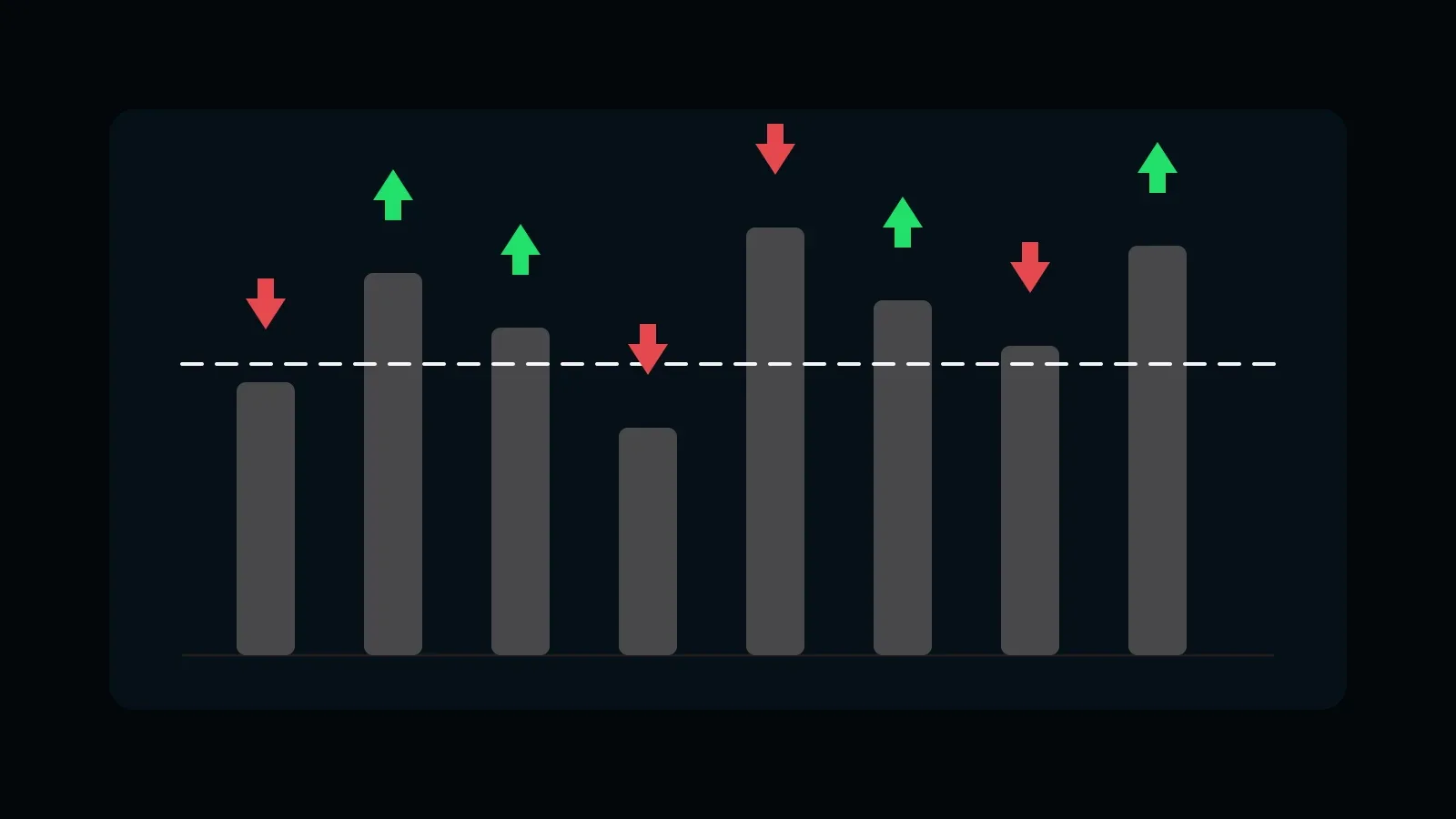
Because the price before the report already contains expectations, often above the official consensus. The Sufics calendar measures the price change over 48 hours after the release using hourly candles of Binance perpetual contracts on US stocks, which trade around the clock, so the reaction is visible even at night. In the snapshot of November 3, 2026 (11:07 UTC) the median 48-hour move was 6.2% in either direction across 172 reports, and the price moved the way of the surprise, up after a beat and down after a miss, in 45% of 158 cases where both the surprise and the move were non-zero.
Examples from the recent reports table in the same snapshot; price is the Binance contract over 48 hours:
| Company, report date | EPS actual / estimate | Surprise | Price over 48 hours |
|---|---|---|---|
| ExxonMobil, Oct 30 | $4.23 / $3.90 | +8.5% | −0.1% |
| Caterpillar, Oct 29 | $7.20 / $7.12 | +1.1% | −4.4% |
| Merck, Oct 29 | $2.49 / $2.12 | +17.4% | +3.8% |
| Amazon, Oct 29 | $1.89 / $2.01 | −6.0% | −1.6% |
These are individual cases, not a pattern: an 8.5% beat can end at zero and a miss at a small decline. The usual reasons are three: participants expected more than the consensus; the company changed its guidance; one-off items landed in earnings per share while the market looked at revenue and margins. How this affects the timing of a purchase is covered in is it better to buy before or after earnings.
Can you know in advance whether a company will beat earnings estimates?
No, and that applies to any company: Nvidia, Meta, Palantir or a second-tier bank. Before publication the result is known only inside the company, and trading on that knowledge is insider trading, which the US Securities and Exchange Commission prosecutes (definition on Investor.gov, checked 03.11.2026). Everything else is an estimate: "expected to beat" lists on aggregator sites come from their own models, and that is a probability, not knowledge.
Sufics does not forecast whether a company will beat. The earnings calendar shows for each company the report date and slot, the consensus EPS with its source and snapshot time, and for reports already out, the actual figure, the estimate, the surprise and the 48-hour price move; the most anticipated earnings this week sit on the same page. In the dashboard, an upcoming report also gets the expected size of the move from the ticker's or its sector's history, with the sample size, and a line on how many of the last reports beat consensus. That answers "how far", not "which way".
How do you use consensus and the earnings schedule before a report?
- Check the date and the slot: before the open or after the close. That decides when the price reacts; how to convert the time to your clock is covered in what time are earnings released.
- Write down the consensus EPS and revenue the day before the report, and the source: that is what the result will be compared with.
- Look at the history: how often the company has beaten consensus and how the price moved after past reports. That sets the usual range, not the direction.
- Size the position for the usual move against you, not for "it will probably beat". How to do the maths is in the article on risk management trading.
- After the report, read the guidance and the analyst call rather than the "beat" headline: the market reacts to them just as much.
Investing in stocks carries a risk of losing money: neither consensus nor a history of beats guarantees a result, and past price reactions do not repeat on schedule. This article describes data and is not investment advice. Who reports this week is collected in the review of earnings for the week of November 2–6.
Key takeaways
- Consensus EPS is the average of analysts' estimates published by aggregators; it changes until the report day and can differ between providers.
- Per FactSet as of 30.10.2026, 78% of S&P 500 companies on average beat estimates over five years: a beat itself is the norm, not a signal.
- In Sufics measurements as of 03.11.2026 the price moved the way of the surprise in 45% of 158 cases: the direction after a report is close to a coin flip, the size of the move is more predictable.
- Whether a company will beat cannot be known in advance; Sufics does not forecast it and shows the date, the consensus and the history of price reactions.
Frequently asked questions
Who is expected to beat earnings this week?
Nobody outside the companies themselves knows in advance. What is known is who reports and what earnings per share analysts expect: that data is in the earnings calendar. Per FactSet statistics, most S&P 500 companies beat consensus on average, so an "expected to beat" list differs little from the list of everyone reporting.
Is Nvidia expected to beat earnings?
Before the report is published, nobody outside the company knows. What you can check in advance is the report date and slot, the consensus EPS, how often the company has beaten it before, and how the price moved after past reports. Past beats do not guarantee the next one.
What stocks are expected to beat earnings?
Such lists on aggregator sites are the output of their own models, which makes them a probability, not knowledge. Given that about three out of four S&P 500 companies on average report above consensus, being on such a list says little by itself about the future price move.
What is an earnings surprise?
The difference between actual earnings per share and the consensus estimate, as a percentage of the estimate. A positive surprise means a beat, a negative one a miss. When the estimate is negative, as with loss-making companies, read the surprise percentage with care: a small difference in cents produces large percentages.
If a company beats estimates, will the stock go up?
Not necessarily. In Sufics measurements as of November 3, 2026, the price over 48 hours after the report moved the way of the surprise in 45% of 158 cases. The market compares the result with its own expectations, which are often above consensus, and reacts to the company's guidance for the next quarter as much as to the past one.
Did Tesla beat earnings?
For any company the answer is found in two places: the press release on the company's investor relations page and the recent reports table in the Sufics earnings calendar, where the actual figure, the estimate, the surprise and the 48-hour price move sit side by side. The same table shows whether the price direction matched the direction of the surprise.