What is a bond: how OVDPs, Ukrainian war bonds and US Treasuries work
Investing · · 8 min
What is a bond? A debt security: you lend the issuer money for a set term, it pays interest (the coupon) and returns the face value at maturity. OVDPs and war bonds are issued by Ukraine's Ministry of Finance, Treasuries by the US Treasury. They differ in currency, access, tax and risk, and their income is not guaranteed.
By Viktor Skrin
In short: OVDPs, war bonds and Treasuries
| OVDPs | War bonds | Treasuries | |
|---|---|---|---|
| Issuer | Ministry of Finance of Ukraine | Ministry of Finance of Ukraine, they are OVDP issues | US Department of the Treasury |
| Currency | hryvnia, dollar, euro | hryvnia, dollar, euro | dollar |
| Where to buy | bank or broker | Diia app, bank or broker | broker; TreasuryDirect only with an SSN |
| Tax for an individual in Ukraine | no personal income tax or military levy | same as OVDPs | the OVDP exemption does not apply, check with the tax service |
| Credit risk | Ukraine | Ukraine | United States |
| Main risks | inflation, exchange rate, liquidity | the same | interest rate, dollar-to-hryvnia rate |
The table has no rates: every issue has its own. Sources are given below, checked on 28 October 2026.
How does a bond work: coupon, maturity and yield?
A bond is a debt security. The buyer lends the issuer money for a set term; the issuer pays interest (the coupon) and returns the face value on the maturity date. A bondholder is a creditor, not a co-owner like a shareholder.
Hypothetical example, not the result of a real account and not a current rate. A bond with a face value of UAH 1,000, a 15% annual coupon and payments every six months. Every six months the holder receives UAH 75, and on the maturity date the last coupon plus the UAH 1,000 face value.
The coupon rate and the yield are not the same thing. If the bond was bought below face value, the gap between the purchase price and face value is added to the coupons; if above, it is subtracted. Yield to maturity (YTM) captures this. In the same hypothetical example the bond is bought for UAH 960 one year before maturity: two coupons of UAH 75 and the face value arrive, UAH 1,150 in total, which is UAH 190 above the purchase price — about 19.8% of UAH 960. Bought for UAH 1,030, the gain is UAH 120, about 11.7%.
That yield only materialises if the issuer pays everything on time. Bonds carry a risk of losing money.
Why do bond prices fall when interest rates rise?
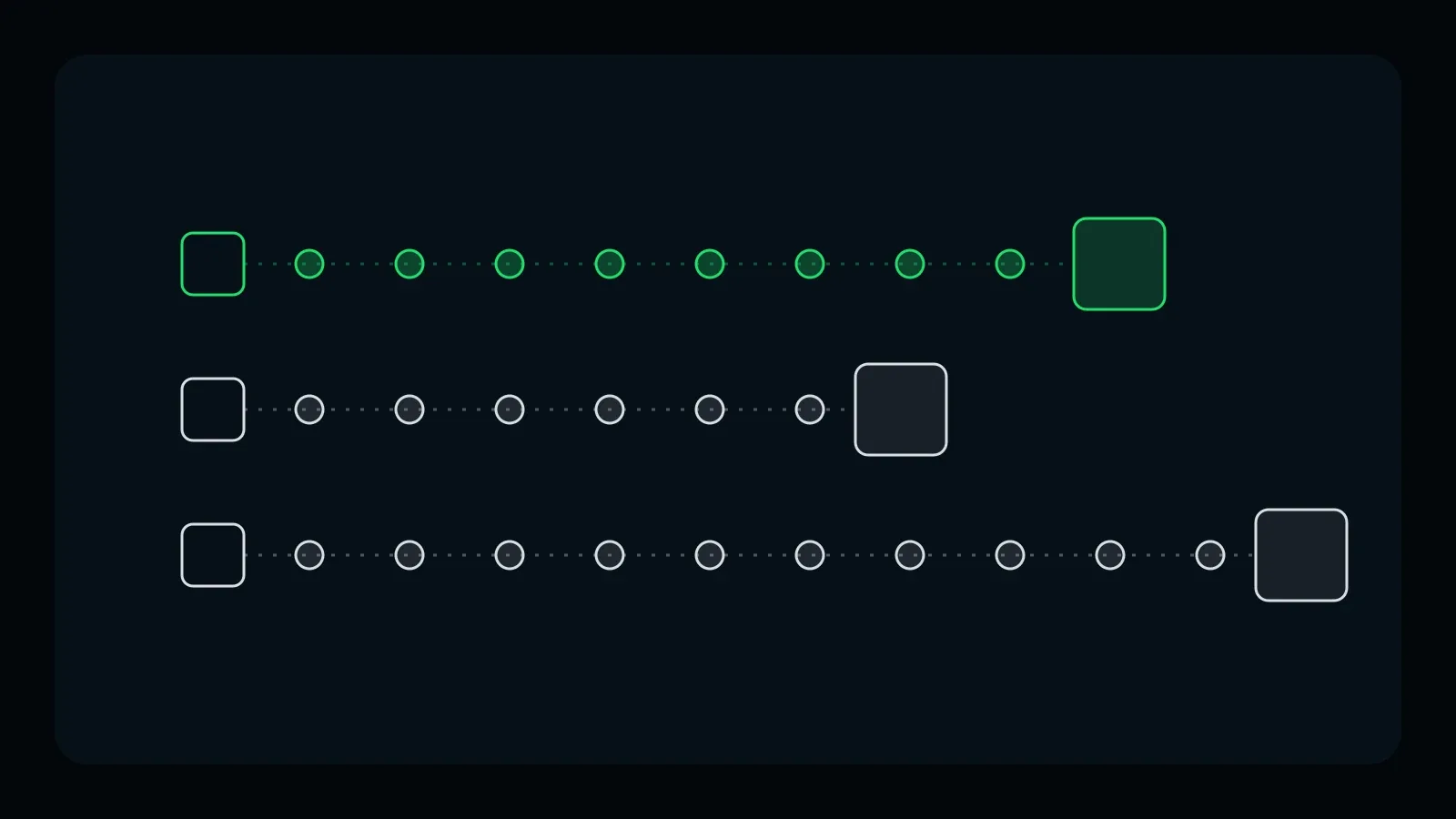
The coupon is fixed at issue, while market rates move. When new issues pay more, an older bond with a lower coupon only sells at a discount, so its price falls. When rates drop, an older bond with a high coupon gains in price.
For someone holding the bond to maturity, these swings do not change the outcome as long as the issuer pays: the same coupons and the same face value arrive. They matter when the bond has to be sold early: the sale price can be below the purchase price. The further away maturity is, the more the price reacts to rates.
What are OVDPs and how do you buy them?
OVDPs are Ukraine's domestic government loan bonds (ОВДП in Ukrainian). The Ministry of Finance issues them and places them at auctions; announcements and results are published on the Ministry's auctions page. Issues come in hryvnia and in foreign currency.
Currency changes the rate a lot. In October 2025 the Ministry placed hryvnia OVDPs at a weighted average yield of 16.5% a year and dollar OVDPs at 4.06% (Ministry of Finance, 3 November 2025). These are past placements, not today's rates and not a promise of income. The hryvnia rate is higher partly because the holder bears the hryvnia's inflation and currency risk.
Individuals buy OVDPs through banks and brokers, and war bond issues also in the Diia app (same source).
Tax. Interest on government securities issued by the Ministry of Finance is not part of an individual's taxable income (subparagraph 165.1.2 of the Tax Code), and neither is investment profit from trading them, including exchange-rate gains (165.1.52). The military levy is not charged on this income (subparagraph 1.7, paragraph 16-1, subsection 10, section XX). Text: the Tax Code on the Verkhovna Rada website, checked on 28 October 2026. The rules change: check the current version or a tax adviser before buying.
How do war bonds differ from regular OVDPs?
War bonds are OVDPs, not a separate kind of debt. The Ministry of Finance uses the name for issues whose proceeds fund defence and names them after cities, for example "Alupka". They have been sold in Diia since October 2022 as a joint project of the Ministry of Finance and the Ministry of Digital Transformation (Ministry of Finance, 24 June 2026).
The face value of one bond is UAH 1,000, USD 1,000 or EUR 1,000; they can be bought in Diia, at a bank or through a broker (Ministry of Finance, 3 November 2025). The Ministry publishes details of each issue on bonds.gov.ua.
One issue as an example: war bond UA4000239040 "Alupka" was first placed on 26 May 2026 with a nominal yield of 15.85% a year and matures on 26 April 2028 (Ministry of Finance, 24 June 2026). These are the terms of one issue as of that news item; later issues have different terms. A government bond does not guarantee that your money keeps its value after inflation or in dollar terms.
War bond issues are Ministry of Finance securities, so the same tax rules apply to them as to other OVDPs.
What are Treasuries and can you buy them from Ukraine?
Treasuries are US government bonds issued by the US Department of the Treasury. By term they split as follows (TreasuryDirect, checked on 28 October 2026):
- Bills — 4 to 52 weeks, no coupon: sold at face value or at a discount, the income is the difference.
- Notes — 2, 3, 5, 7 and 10 years, interest every six months.
- Bonds — long issues of 20 and 30 years.
- TIPS — 5, 10 and 30 years, the principal is adjusted by the Consumer Price Index.
Buying directly from the US Treasury goes through TreasuryDirect, but only a person with a valid US Social Security Number (SSN) can open an account there — this is set out in 31 CFR 363.11. Most residents of Ukraine do not have one, so they buy Treasuries through a broker with access to the US market. Current rates are published on the US Treasury interest rates page.
For someone who counts money in hryvnia, Treasuries carry currency risk: the income is in dollars, and the result in hryvnia depends on the exchange rate. The 165.1.2 exemption covers only securities of Ukraine's Ministry of Finance; for the tax treatment of interest on foreign bonds, check with the tax service or an adviser.
What are the risks of bonds?
- Non-payment. The issuer can delay payments or restructure the debt. For government bonds this risk is usually lower than for corporate ones, but it is not zero.
- Interest rate risk. Rates rise, the bond's price before maturity falls. This hurts those who sell early.
- Inflation. A fixed coupon loses purchasing power if prices rise faster than the rate.
- Exchange rate. For foreign-currency OVDPs and Treasuries, the result in hryvnia depends on the rate on the day of purchase and on the day of maturity.
- Liquidity. Selling a bond before maturity is not always quick or possible at the purchase price. Before buying, ask the bank or broker how and at what price it buys bonds back.
Where do bonds fit in a portfolio?
Bonds usually give a more predictable cash flow than stocks and move less in price, but they do not protect against every risk. How they behave next to stocks is covered in "Stocks vs bonds". Which income can honestly be called passive is in "Passive income from investing", and an overall map of instruments is in "Where to invest money". If you are also considering trust management, start with how to check a fund manager.
Investing in bonds carries a risk of losing money, and past rates do not guarantee future ones. This article describes instruments and is not investment advice.
Key takeaways
- A bond is debt: the holder receives coupons and the face value at maturity, provided the issuer pays.
- Yield to maturity depends on the purchase price, not just the coupon; before maturity the price moves with interest rates.
- War bonds are OVDP issues; they can be bought in the Diia app, at a bank or through a broker.
- Interest and profit on Ukrainian Ministry of Finance securities are exempt from personal income tax and the military levy (Tax Code 165.1.2 and 165.1.52).
- TreasuryDirect requires an SSN, so from Ukraine Treasuries are bought through a broker, with currency risk.
Frequently asked questions
Can you sell OVDPs before maturity?
Yes, through a bank or broker on the secondary market. The sale price depends on market rates at that moment and can be below the purchase price. It is worth asking the bank or broker about buy-back terms and pricing before buying.
How much does one Ukrainian war bond cost?
According to Ukraine's Ministry of Finance, the face value of one war bond is UAH 1,000, USD 1,000 or EUR 1,000 depending on the currency of the issue. The purchase price can differ from face value: it includes the market price and accrued coupon.
What happens if a government does not pay on its bonds?
Holders may receive payments later or smaller than the terms of the issue promised, for example after a debt restructuring. That is why even government bonds are not risk-free, and investing in them carries a risk of losing money.
How is a bond different from a bank deposit?
A deposit is a contract with a bank, and its balance does not change in price. A bond is a security: the issuer pays on it, and its market price moves until maturity. A bond sold early can only be sold at the current price.
What is a bond coupon?
It is the interest the issuer pays the bondholder, usually every six months or once a year. The coupon size and payment dates are set in the terms of the issue. For bonds without a coupon, the income is the difference between the purchase price and face value.
Is a bond a risk-free investment?
No. Bonds carry non-payment, interest rate, inflation and currency risk, as well as the risk that the bond cannot be sold quickly at the price you need. A government bond reduces credit risk but does not guarantee that money keeps its value after inflation and exchange rates.