What is a funding rate: perpetual futures funding explained, formula and who pays whom
Market analytics · · 6 min
The funding rate is a series of periodic payments between holders of long and short positions in perpetual futures contracts. They keep the contract price close to the asset price: when the rate is positive, longs pay shorts; when negative, the reverse. On Binance the default is every 8 hours. Payments are based on the notional position value, not the margin.
By Viktor Skrin
What is a funding rate and why do perpetual futures need it?
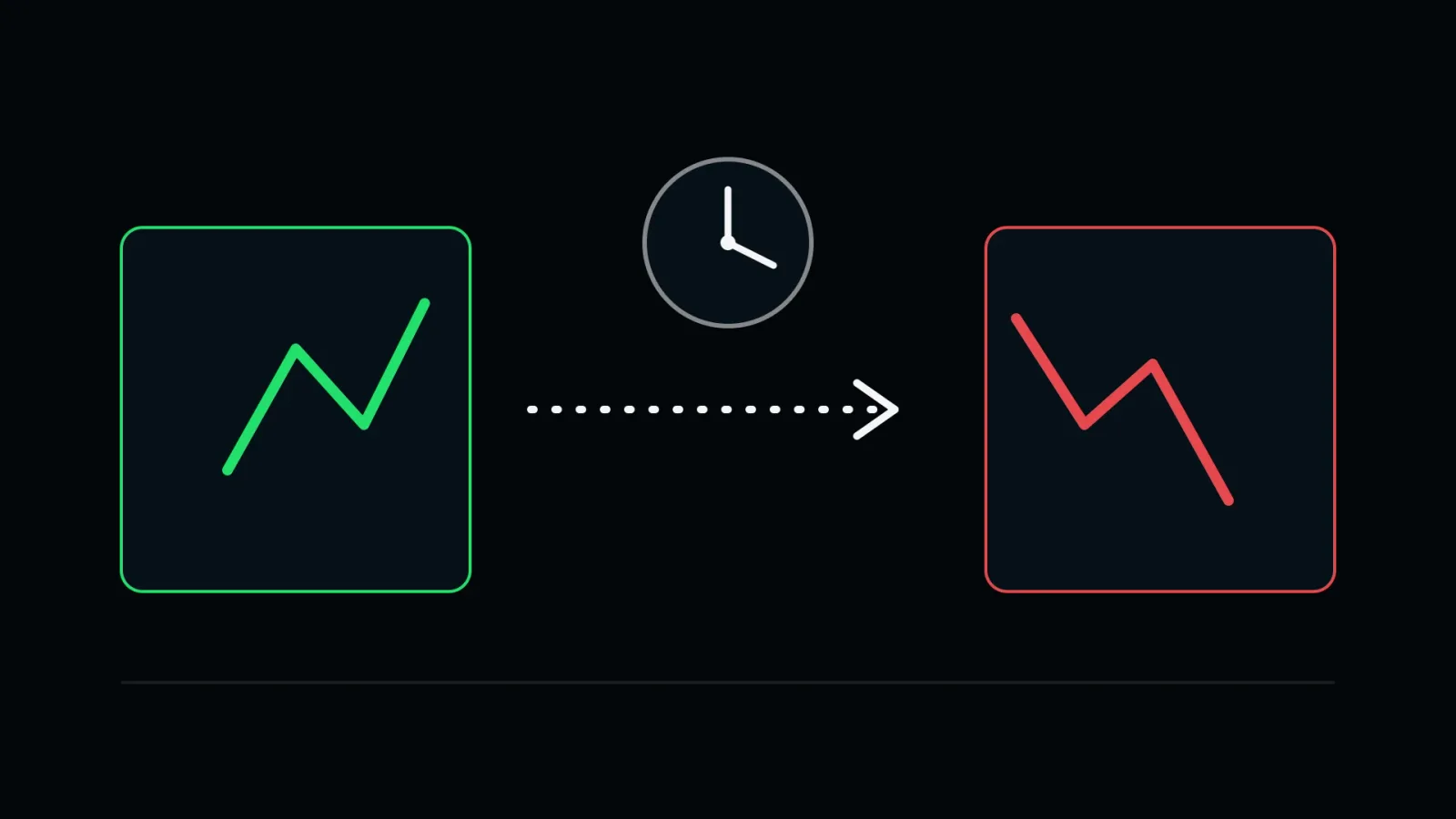
A perpetual futures contract has no expiry date, so a position can be held for months. But with no settlement date, nothing forces the contract price to meet the price of the underlying asset. If a bitcoin contract traded well above bitcoin itself, nothing would make the gap close.
Funding is the mechanism that fixes this. One side of the market regularly pays the other, which makes the crowded side more expensive to hold. The contract price is pulled toward the asset price continuously rather than on a set date.
Who pays funding to whom?
The rule is simple. According to the Binance documentation on funding rates (checked 6 November 2026):
- when the rate is positive, long holders pay short holders;
- when the rate is negative, short holders pay long holders;
- the exchange takes no fee on funding — money moves directly between traders.
The logic: if the contract trades above the asset, the rate rises and holding a long gets more expensive. Some traders open shorts to collect those payments, the supply of the contract grows, and its price falls toward the asset price. When the contract trades below the asset, the mechanism works in reverse.
How is the funding rate calculated?
The rate has two parts: an interest component and a premium index. Binance data as of 6 November 2026:
| Part | What it is | Value |
|---|---|---|
| Interest component | A fixed rate | 0.03% per day, i.e. 0.01% per 8 hours |
| Premium index | The gap between the contract price and the asset's index price | Changes continuously |
If the contract trades close to the asset, the premium index is near zero and the rate stays near the interest component. The larger the contract's premium or discount, the further the rate moves away from it. The exact formula includes a ±0.05% damper that smooths the effect of the interest component; the exchange gives it in the same documentation.
The rate is capped above and below. The limits depend on the contract: for the main pairs they are tied to the maintenance margin ratio, and for other USDⓈ-M perpetual contracts they are ±2%. The exchange can change these values, so check the current ones on the contract page.
Frequency. By default funding is settled at 00:00, 08:00 and 16:00 UTC — three times a day. In high volatility the exchange may change the interval for a specific contract, for example move to hourly and later return to four-hourly.
How do you calculate a funding payment?
The formula from the Binance documentation:
Funding payment = Nominal position value × Funding rate
Nominal value is the contract size multiplied by the mark price. It is the whole position including leverage, not the margin.
A hypothetical example (not the result of a real account):
- margin: 1,000 USDT;
- leverage: 10×;
- nominal position: 10,000 USDT;
- rate per period: 0.01%;
- payment for one period: 10,000 × 0.0001 = 1 USDT;
- per day (3 periods): about 3 USDT;
- per week: about 21 USDT.
Relative to a 1,000 USDT margin that is roughly 2.1% a week on funding alone, with no price movement at all. At 20× leverage the same margin gives twice the nominal and twice the payment. Funding is not an exchange fee, but it is a real cost of holding a position when you are on the paying side.
What do positive and negative funding mean?
| Situation | Who pays | Who receives | What it says about the market |
|---|---|---|---|
| Rate above zero (contract above the asset) | Longs | Shorts | Demand for longs exceeds demand for shorts |
| Rate below zero (contract below the asset) | Shorts | Longs | Demand for shorts exceeds demand for longs |
| Rate near zero | Payment is minimal | Payment is minimal | Contract trades close to the asset |
The sign of the rate describes the imbalance in positions at that moment, not a price forecast: high funding does not mean the market will reverse, and negative funding does not mean a rise. It cannot be used as a buy or sell signal.
Funding is tied to the risk of leverage: the payment is deducted from the available balance, and accumulated payments together with a price loss bring liquidation closer. The liquidation map shows where positions that could be closed by force are concentrated.
How does funding differ between dated and perpetual futures?
Funding exists only for perpetual contracts. Dated futures do not have it: their price converges to the asset price by itself as expiry approaches. How a perpetual contract works overall — mark price, leverage, the difference from a dated one — is covered in the article on perpetual futures.
Funding is calculated on the nominal position value, while liquidation is triggered by the mark price. These are two separate mechanisms, but both depend on leverage.
Where can you see the current funding rate?
The rate and the time of the next settlement are shown on the trading page of each perpetual contract on the exchange; the exchange publishes rate history in the futures data section. Look at the size as well as the sign: a rate of 0.01% per period and a rate ten times higher put very different loads on a position. Compare rates over the same interval, since different contracts may use different ones.
How does funding affect trading?
Some practical consequences:
- Holding a position on the paying side is a constant cost. In a sideways market it reduces the result without any price movement.
- Funding grows with holding time. Even small rates add up over weeks.
- Funding arbitrage means holding spot and a short perpetual contract at the same time and collecting payments while the rate is positive. It is direction-neutral, but it has its own risks: the rate can change sign, and the margin on the short can be lost in a sharp price rise.
- Check the rate before entering. It is on the page of every perpetual contract, and the rate history is in the exchange's data section.
If you hand capital to a manager, ask them how these payments are reflected in the result. For what else to check, see how to check a manager.
Futures trading involves a risk of losing money, up to the whole margin, and does not guarantee a result. This article explains how the instrument works and is not investment advice.
Key takeaways
- Funding keeps the perpetual contract price near the asset price.
- When the rate is positive, longs pay shorts; when negative, shorts pay longs.
- On Binance the default is 3 periods per day: 00:00, 08:00 and 16:00 UTC.
- The payment is based on the notional position size, not the margin — leverage multiplies the cost.
- Rate = interest component (0.01% per 8 hours) + premium index (gap between contract and asset price).
- The exchange does not take a fee on funding — money goes directly between traders.
Frequently asked questions
What is a funding rate in simple terms?
It is a regular payment between holders of long and short positions in a perpetual futures contract. The payments keep the contract price close to the asset price. When the rate is positive, longs pay shorts; when it is negative, shorts pay longs.
How often is funding paid?
Under Binance's rules (checked 6 November 2026) the default is 3 times per day: at 00:00, 08:00 and 16:00 UTC. In high volatility the exchange may change the interval for a specific contract, for example to hourly.
What amount is the funding payment based on?
On the notional position value, not on the margin. With margin of $500 and leverage of 10 the notional is $5,000, and funding is charged on that amount. The higher the leverage, the more noticeable funding is relative to the margin.
What does the funding rate consist of?
The rate consists of an interest component and a premium index. The interest component is 0.03% per day by default, i.e. 0.01% per 8 hours. The premium index is the gap between the contract price and the asset's index price. The formula with the ±0.05% damper is in the Binance documentation.
Does the exchange take a fee on funding?
Under Binance's rules, no. Money moves directly from longs to shorts, or the reverse. The exchange calculates the rate and processes the payments but does not take a share.
Can you lose more than your margin because of funding?
Funding is deducted from the available balance. If the balance runs out, the exchange may close the position. With high leverage and a long hold on the losing side, accumulated funding on top of the price loss can speed up liquidation.
What does a negative funding rate mean?
A negative rate means the contract trades below the asset: shorts pay longs. It describes an imbalance in positions, not a price forecast. For a short holder the payment is then a cost, and the long side receives it.
Where can I see the current funding rate?
The rate and the time of the next settlement are shown on the trading page of the perpetual contract on the exchange. The exchange publishes rate history in its futures data section.