Crypto managed account: API key, coin transfer, PAMM or fund
Investing · · 5 min
A crypto managed account works in one of four ways: an API key without withdrawal rights, a coin transfer to the manager, a PAMM account or a crypto fund. With a key the coins stay in your exchange account; in the other models the manager holds them. Sufics uses transfers. Every model carries a risk of losing money.
By Viktor Skrin
What are the ways to hand crypto to a manager?
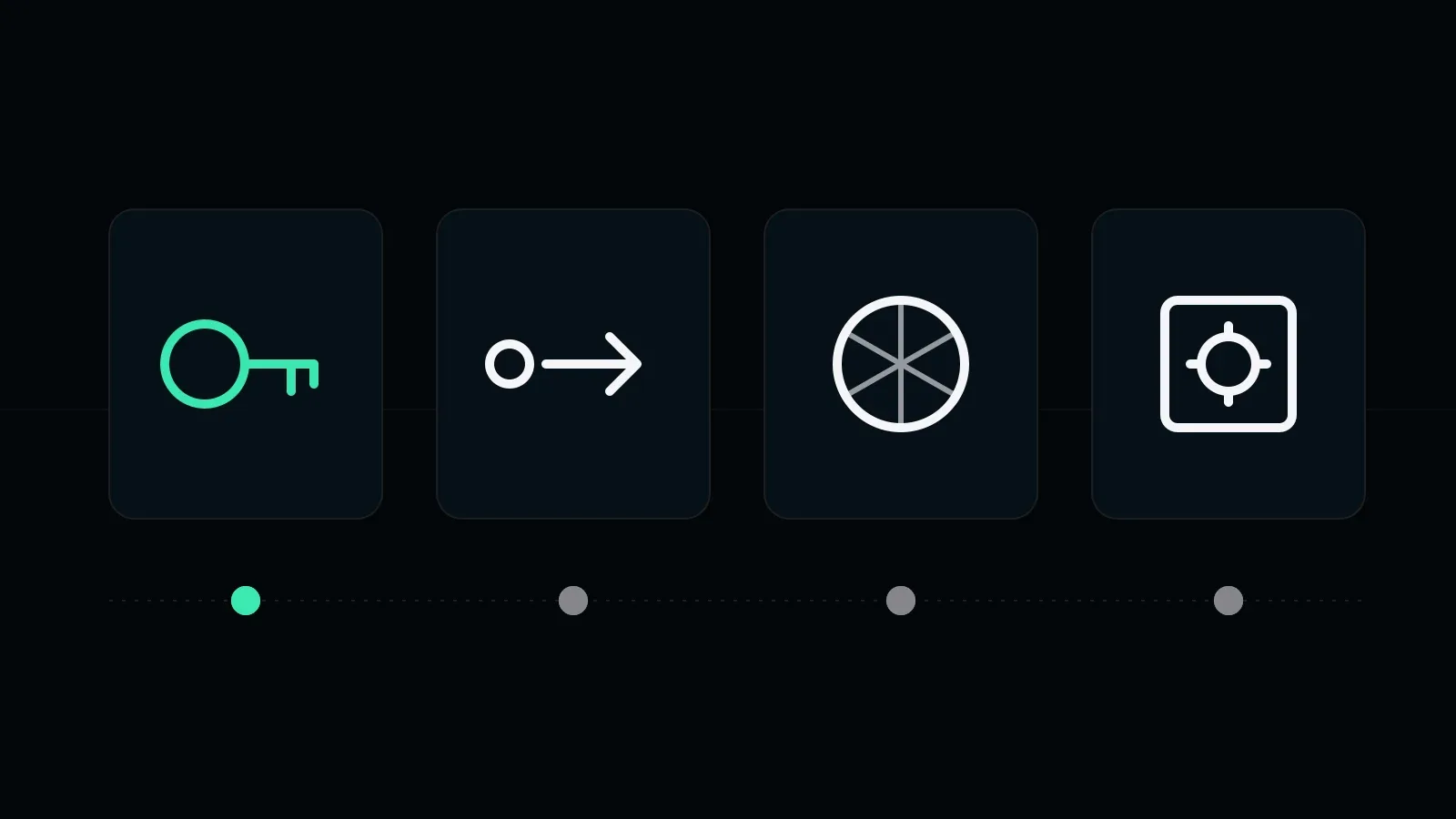
There are four, and they differ on one question: where the coins sit while the manager trades. The comparison below shows the general features of each model; for a specific company, the contract sets the terms.
| Model | Where the coins are | How the investor sees trades | If the manager disappears or goes bankrupt |
|---|---|---|---|
| API key | in your own exchange account | in your account's order history | coins stay in your account; revoking the key stops trading |
| Coin transfer | with the manager | as the manager shows them: dashboard, feed, reports | you claim a refund as a creditor |
| PAMM account | in a pooled account at a broker or platform | platform statistics | under the platform's and broker's rules |
| Crypto fund | with the fund and its custodian | fund reports under the agreement | depends on the fund's structure and jurisdiction |
How does a managed crypto account with an API key work?
You create an access key on the exchange and give it to the manager. They trade in your account but cannot withdraw coins to their own address unless withdrawals are enabled on the key.
Binance describes this in its help article "How to Create API Keys on Binance" (primary source, checked 30.10.2026): a key without IP access restrictions can only read account data, and withdrawal permission cannot be enabled without a list of allowed IPv4 addresses. Before handing over a key, open its settings and make sure withdrawals are off.
What the model does not solve: a manager can lose money through a key just as well. Their leverage, position size and trade frequency still decide the result. More on leverage in the article on perpetual futures.
What does an investor risk when transferring coins to a manager?
In the second model you send coins to the manager's address and they manage them directly. The main risk here is the counterparty. If the manager shuts down, loses exchange access or vanishes, the only way to get money back is the contract and the courts of the country where they operate.
In return, the manager runs one account for all clients and does not depend on whether your exchange allows trading through a key.
Sufics works on this model. A client funds the account by sending USDT (TRC-20), BTC or ETH to the address shown in the dashboard; an administrator confirms the deposit request. Withdrawals are requested in the dashboard, from $50. The manager makes the trades, and the client sees the positions on their account in the dashboard. Closed trades on Binance futures are published in the feed on the home page with entry and exit prices, losing ones included. This does not remove counterparty risk, but it gives you something to check.
What is a PAMM account and who holds the money?
A PAMM is a pooled account where a manager trades several investors' money at once, and profit and loss are split by share. The money sits with a broker or platform, and they set the withdrawal rules. Before joining, find out who holds the assets and where the platform gets the manager's statistics. How PAMM differs from copy trading and a managed account is covered in the comparison on 8 criteria.
Who can you trust with crypto management and still see every trade?
Someone whose trades you can check without their help. The check takes an evening:
- Where the history comes from. Orders placed through your key appear in your account history on the exchange. With a transfer, ask where the manager's trades come from: the exchange API or a spreadsheet they fill in themselves.
- Losing trades. Real trading always has losses. If there are none in the history, ask where they went.
- Account drawdown. A list of closed trades does not show how deep the account fell between them. How to measure it: the article on maximum drawdown.
- Exit. How to stop: revoke the key or file a withdrawal request, how long it takes, and whether there are lock-up periods.
- Contract. What it says about the investor's rights after a loss and who is liable if the exchange fails.
The full list of questions is in the article on how to check a fund manager.
Which signs say it is better not to hand over your money?
- a fixed monthly income or "no risk" is promised;
- the trade history exists only as screenshots;
- the manager rushes you: "places are running out", "bonus until Friday";
- earlier clients are paid with new clients' money, and your income depends on how many people you bring in;
- there is no contract, or it does not say how and when money is withdrawn.
Regulators describe the signs of pyramid schemes too, for example the US Securities and Exchange Commission (SEC) in its Ponzi scheme guide on Investor.gov (primary source, checked 30.10.2026).
Investing in crypto through any management model carries a risk of losing money: a manager can trade at a loss, and neither an API key nor a contract can guarantee a result. Past trades do not guarantee future ones. This article describes the models and is not investment advice. How crypto trust management works at Sufics is described on the home page.
Key takeaways
- The main difference between the models is who holds the coins while the manager trades.
- An API key without withdrawal rights keeps coins in your account but does not protect against losing trades.
- With a coin transfer the main risk is the counterparty: only the contract gets your money back.
- Trust someone whose trades, losses and drawdown you can check without their help.
- A promise of fixed income and pressure to hurry are reasons not to hand over money.
Frequently asked questions
Who can I trust to manage my crypto and still see every trade?
Someone whose trades you can check without their help: through the order history in your own exchange account when using a key, or through a trade feed from the exchange API with a transfer. The history should include losing trades and account drawdown, and the contract should set out how withdrawals work.
Which is safer: sharing an API key or transferring coins?
For custody, an API key without withdrawal rights is safer: the coins stay in your exchange account and revoking the key stops the trading. The key does not protect the trading result: a manager can lose money in both models.
Can a manager withdraw coins through an API key?
Only if withdrawal permission is enabled on the key. On Binance it cannot be enabled without a list of allowed IP addresses, so before handing over a key, open its settings and make sure withdrawals are off.
How does crypto management work at Sufics?
Through transfers: a client funds the account in USDT, BTC or ETH to the address in the dashboard, an administrator confirms the deposit, and withdrawals are requested in the dashboard from 50 dollars. The manager makes the trades, and closed trades on Binance futures are published in the feed on the home page. Counterparty risk remains.
What happens to my coins if the manager goes bankrupt?
It depends on the model. With an API key the coins stay in your exchange account. With a transfer, a PAMM or a fund you claim them back under the contract and the platform's or fund's rules, and the outcome depends on the jurisdiction.
Does a crypto managed account guarantee income?
No. A manager can trade at a loss in any model, and past trades do not guarantee future ones. A promise of fixed monthly income is a sign that you should not hand over your money.