Oil stocks, ETFs and futures: how to invest in oil and what you risk
Investing · · 7 min
Oil stocks are the most familiar way to invest in oil: you buy a stake in a company, not the commodity. There are three other routes — oil ETFs, futures and CFDs. In no case does a barrel land in your brokerage account, and each instrument tracks Brent and WTI in its own way. All of them carry a risk of losing money.
By Viktor Skrin
How can you invest in oil: what are the options?
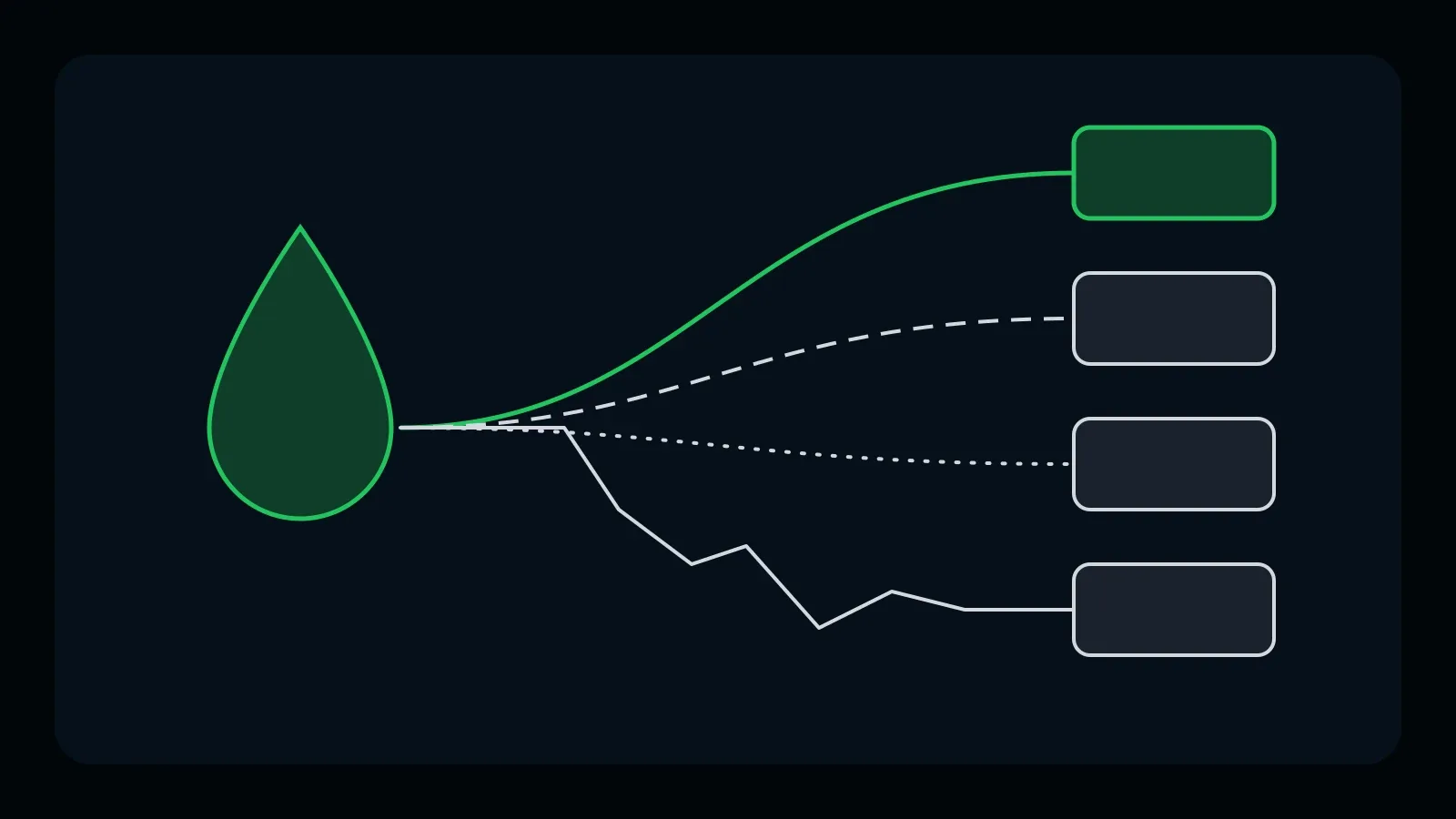
A retail investor has four exchange-based routes to oil, and none of them puts a barrel in your possession. The difference lies in what exactly you hold and what drives the result.
| Instrument | What you hold | What drives the result | Main risk |
|---|---|---|---|
| Oil stocks | a stake in a company | oil price, production costs, debt, dividend policy | management mistakes, sanctions, a sector-wide fall |
| Oil ETF | units of a fund that holds futures | the price of near-term futures and the cost of rolling them | contango: the fund lags the oil price |
| Oil futures | an exchange contract | the contract price at expiry | margin calls, losses larger than the deposit |
| Oil CFD | a contract with a broker | the difference between entry and exit prices | leverage, liquidation, broker reliability |
The lower the row, the closer the instrument is to a pure bet on price and the fewer mistakes it forgives.
What are Brent and WTI, and who publishes their prices?
Brent and WTI are the two benchmark grades used to price oil worldwide; both are quoted in dollars per barrel.
- Brent is North Sea crude. Its main exchange contract is Brent Crude Futures on ICE Futures Europe.
- WTI (West Texas Intermediate) is US light crude. It trades on NYMEX, part of CME Group; according to the CME specification, one standard contract is 1,000 barrels with delivery in Cushing, Oklahoma (checked 29.10.2026).
The gap between them (the Brent–WTI spread) moves with transport costs, storage levels and the production balance. When the news says "oil got cheaper", it usually means the nearest futures contract on one of these grades, not the price of a specific physical deal.
What drives oil stocks besides the oil price?
Oil stocks follow oil only partly: the share price also depends on how the company itself is built. Large listed oil and gas companies — ExxonMobil (XOM), Chevron (CVX), Shell (SHEL), TotalEnergies (TTE), BP (BP), Equinor (EQNR) — react differently to the same oil price.
What to look at in a company's reports besides the Brent price:
- Production cost. When oil is cheap, a low-cost producer stays profitable for longer.
- Debt. A heavy debt load makes the stock more sensitive to falling prices and rising rates.
- Dividend policy. Payouts are not guaranteed: companies cut them when oil is weak.
- Business mix. Integrated companies have refining and marketing, which sometimes soften a fall in upstream income.
- Country and sanctions. Where a company produces matters as much as how much.
US oil companies report quarterly; report dates and the price reaction to past reports are in the Sufics earnings calendar. If you are choosing between single companies and the broad market, compare this with investing through the S&P 500 index.
How does contango eat into an oil ETF's return?
An oil ETF usually holds futures rather than oil, and every time it replaces them it can lose money even if the oil price is unchanged. This effect is called contango.
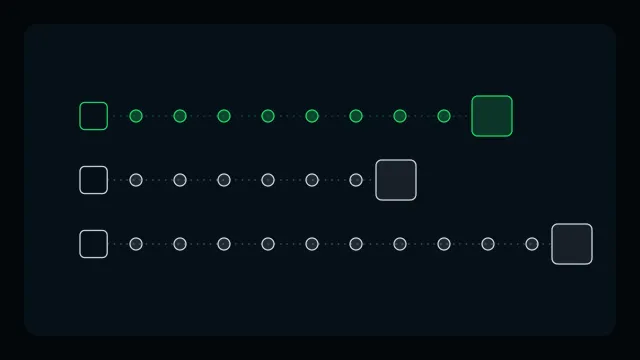
The mechanics: the near-term contract expires, so the fund sells it to buy the next one. If the next contract is more expensive than the near one (that is contango), the fund sells low and buys high at every roll. The opposite situation, backwardation, when the later contract is cheaper, works in the fund's favour, but you cannot build a plan on it.
The funds state this risk themselves. The United States Oil Fund (USO) prospectus, Form S-3 on SEC EDGAR, says that contango in the benchmark futures contract at the time of rolling would be expected to adversely affect the fund's position (checked 29.10.2026). That is why the oil price chart and the chart of such an ETF's units can drift far apart over a year.
There are also oil and gas sector ETFs: they hold company shares, not futures. Contango does not hit them directly, but everything said above about oil stocks applies. Crypto contracts without an expiry date have no roll; a funding rate takes its place — compare with how a perpetual futures contract works.
Why are oil futures risky for a retail investor?
A futures contract is an obligation to buy or sell oil at the contract price on the expiry date, so the loss can exceed the deposit you put up.
Futures need a margin deposit. If the price moves against the position, the broker asks for more money — a margin call; if you do not add it, the position is closed by force.
The best-known example is 20 April 2020. According to the US Energy Information Administration (EIA), the front-month WTI futures contract on NYMEX traded below zero for the first time since trading began in 1983. According to the US Congressional Research Service, the May contract closed at about −$37.62 per barrel. The cause: expiry coincided with a collapse in demand while storage in Cushing was nearly full, so contract holders paid to avoid taking delivery. It was an extreme case, but it shows the main point: a futures contract is not a purchase of a commodity but an obligation with a date.
How does leverage in CFDs lead to liquidation?
A CFD is a contract with a broker on the price difference: you hold neither oil nor an exchange futures contract, and leverage multiplies both profit and loss.
A hypothetical example, not the result of a real account: with 1:5 leverage, a 10% move in the oil price changes your margin by about 50% in the same direction. A 20% move against the position wipes out the margin entirely, and the broker usually closes the position earlier, at the level set in its rules. How to calculate the liquidation price and why even short spikes hit it is covered in the article on leverage and liquidation.
CFDs also carry broker risk: you depend on its quotes, its rules for closing positions and its reliability.
How do you choose a way to invest in oil?
Start not with the instrument but with answers to five questions:
- Horizon. For years, company shares or sector ETFs fit better; futures and CFDs are built for periods up to expiry or for active trading.
- Readiness for a margin call. If you are not ready to add money within the day, futures and leveraged CFDs are not for you.
- Time to monitor. Leveraged positions need watching outside your working hours too: oil trades almost around the clock.
- Share of the portfolio. Oil is one of several commodity assets; compare it with other options in the article on where to invest money.
- Who makes the decisions. If a manager trades for you, check them against the points in the article on how to check a fund manager.
How does Sufics work with oil?
Brent and WTI crude is one of the five areas of Sufics managed accounts, alongside precious metals, US stocks and indices, bitcoin and ether. The manager places the trades, and the client sees every position in the dashboard. Closed trades are published in the feed on the home page.
Managed accounts, like trading on your own, do not guarantee results: investing in oil stocks, ETFs, futures and CFDs carries a risk of losing money, and with leverage the loss can exceed the initial deposit. This article contains no oil price forecasts: it describes the instruments and is not investment advice.
Key takeaways
- You cannot put a barrel in a brokerage account: the options are oil stocks, ETFs, futures and CFDs.
- Oil stocks depend not only on the oil price but also on the company's costs, debt and dividend policy.
- An oil ETF holds futures and, in contango, loses on every roll even if the oil price is unchanged.
- A futures contract is an obligation with a date: on 20 April 2020 the front-month WTI contract traded below zero.
- Leverage in CFDs multiplies both profit and loss; the position can be closed before the margin runs out.
Frequently asked questions
Can a retail investor buy physical oil?
In practice, no. Physical delivery under exchange contracts is taken by companies with access to storage and pipelines. A retail investor gets exposure to the oil price through company shares, funds, futures or CFDs and closes the position before delivery.
Do oil companies pay dividends?
Many large oil companies pay dividends, but the amount is not guaranteed. Payouts have been cut in years of weak oil prices. Check each company's current policy in its investor reports rather than in second-hand summaries.
How does an oil ETF differ from an oil sector ETF?
An oil ETF holds futures and follows the nearest contracts, so it is exposed to contango. A sector ETF holds shares of oil and gas companies: contango does not affect it directly, but the costs, debt and dividends of those companies do.
How much money do you need to invest in oil?
It depends on the instrument. A share or a fund unit can be bought one at a time. A standard WTI futures contract is 1,000 barrels, so it needs a sizeable deposit; exchanges also list smaller contracts. The minimum for CFDs is set by the broker.
Does oil protect against inflation?
Not reliably. The oil price sometimes rises with inflation, but it also depends on demand, decisions of producing countries, inventories and geopolitics. Oil and related instruments can fall even in years of high inflation.