How to invest in gold: six ways, their spreads and risks
Investing · · 6 min
You can invest in gold in six ways: a bar or coin from a bank, a metal account, an ETF, futures and a managed account. The main cost of physical gold is the spread: on 1 November 2026 PrivatBank sold a 1 g bar 20% above its buy-back price, a 100 g bar 9.5% above. Gold can fall; investing in metals carries a risk of losing money.
By Viktor Skrin
In short: six ways and their main costs
| Method | What you pay on entry | Threshold | Liquidity | Tax on sale |
|---|---|---|---|---|
| Standard bar from a bank | spread of 7.5–20% (PrivatBank, 1 Nov 2026) | bar price: 1 g at 8,380 UAH | the buying bank only | check with the State Tax Service |
| Investment coin | spread plus a minting premium per the seller's price list | coin price | bank or dealer | check with the State Tax Service |
| Metal account | spread between the bank's rates | per the bank's terms | bank, online | check with the State Tax Service |
| Gold ETF | broker fee and fund fee (in the prospectus) | price of one share | exchange, high | per the broker's country |
| Gold futures | exchange spread, commission, margin | one contract per the exchange specification | very high | per the broker's country |
| Managed account | per the manager's terms | per the terms | per the terms | check with the manager |
Bar prices: PrivatBank's bank metals page, category 1, checked on 1 November 2026: the bank sold a 1 g bar at 8,380 UAH/g and bought it back at 6,675 (a 20.3% gap), 10 g at 6,685 and 6,160 (7.9%), 100 g at 6,560 and 5,940 (9.5%). Since October 2025 the bank handles metals only for its own clients. The other rows carry no figures: each seller has its own, so check before a deal.
What is a spread and why does it matter more than a promised return?
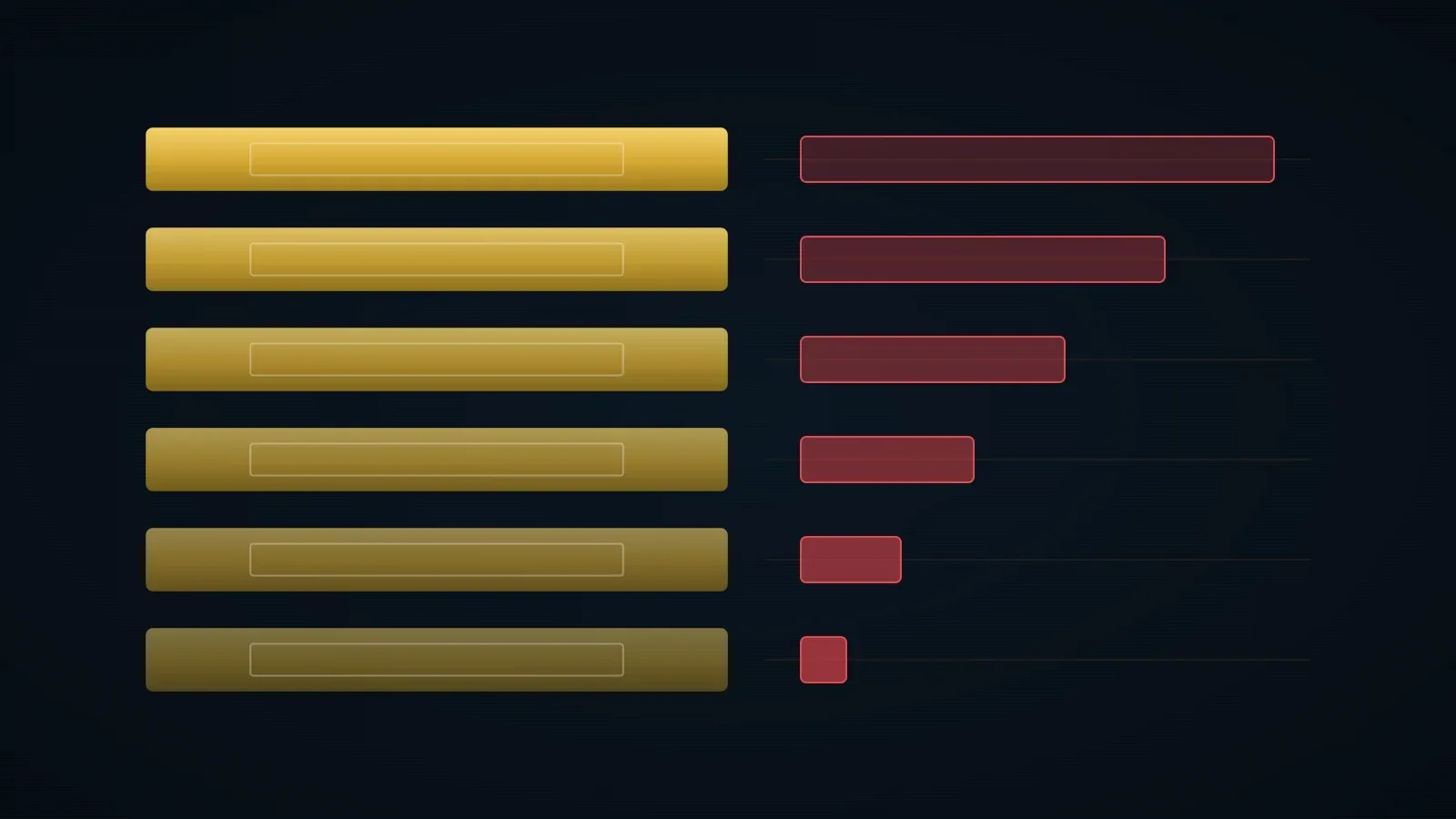
The spread is the difference between the price at which a seller hands you the metal and the price at which it will take it back. You lose that difference on the day of purchase, whatever the gold price does next.
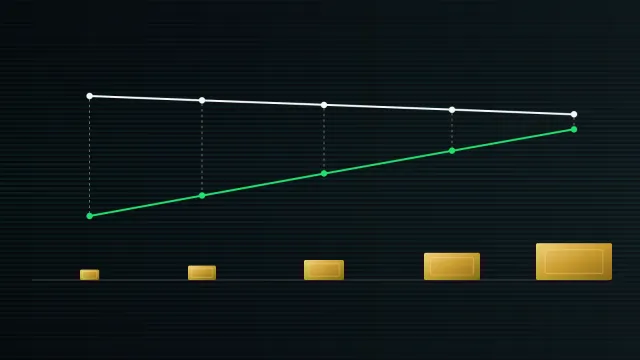
A hypothetical example, not the result of a real account: a 100 g bar bought on 1 November 2026 for 656,000 UAH; the same day the bank would have bought it back for 594,000. To break even, the buy-back price has to rise 10.4%. For a 1 g bar, 25.5%. This is not a forecast or a promise of returns, just the arithmetic of costs: the smaller the bar and the shorter the term, the larger the share of the result the spread eats. Physical gold is an instrument for a long hold, not a one-quarter purchase.
How to invest in gold through a bank
A bar is metal in your hands: you buy it at a branch, receive documents and store it yourself. The buy-back price depends on the category: a bar with damaged packaging is taken back for less. Prices, weights and terms are in Gold bars: how to buy from a bank.
A metal account is a record of grams with no metal in your hands: opened online, nothing to store. One important detail: Article 26 of the Law on the Household Deposit Guarantee System excludes deposits in bank metals from Fund compensation (checked on 24 October 2026). If the bank fails, such a deposit is not protected.
An investment coin is the same metal in a different form. The price includes minting, so per gram a coin is usually more expensive than a bar of the same weight; some coins cost more than their metal because of collector value, but that premium can only be recovered from a collector.
Do you pay VAT when buying gold?
No, if it is investment gold. Ukraine's Tax Code (sub-clause 14.1.279) defines it as bars and plates of 995 fineness or higher and gold coins of 900 fineness or higher, minted after 1800, that are or were legal tender and are sold at no more than the market value of the gold plus 80%; clause 197.26 exempts the supply of such gold from VAT. Other bank metals, silver for example, are not covered by the exemption (sub-clause 196.1.4). Text: Tax Code, edition of 1 November 2026, checked on 1 November 2026.
Tax on a private person's income from selling gold is a separate question: check the procedure in the State Tax Service's public reference (zir.tax.gov.ua) before the deal. For ETFs and futures, taxation depends on the broker's country and your tax residency.
Exchange instruments: ETFs and futures
A gold ETF is bought through a brokerage account like an ordinary share: you hold shares in a fund that stores the metal. The fund's fee is deducted automatically, plus a broker's commission and currency risk; there is no metal in your hands. An investor from Ukraine needs a broker with access to foreign exchanges.
A futures contract is a derivative on gold at a fixed price; the contract size and margin are described in the CME exchange specification. Futures trade with leverage: a loss can exceed the amount invested. It is an instrument for experienced market participants, not a way to "buy gold".
How the gold price has behaved: NBU data
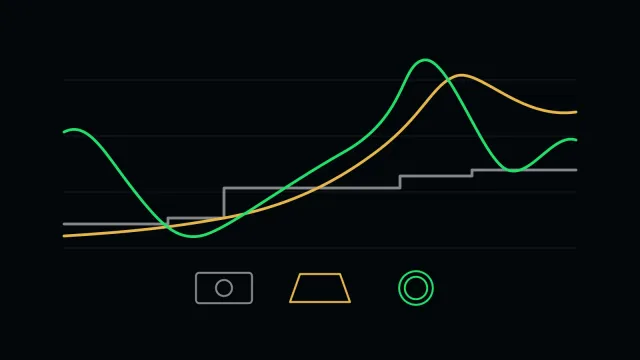
On NBU accounting prices converted to dollars at the official rate, from 1 January 2015 to 1 November 2026 (the NBU API, 4,323 daily values): the deepest fall from a peak was 33.7%, from 7 August 2020 to 21 July 2022; 2025 ended at +68.5%, and 2026 to 1 November stands at −6.8%. In hryvnia gold rose 9.7 times over the period, but in 2015 it fell 37.7% from its peak. This is history, not a forecast: gold can fall for years, and investing in metals carries a risk of losing money.
How does this relate to Sufics?
Sufics is a managed account on the markets for metals, US stocks and indices, oil, bitcoin and ether; the manager makes the trades and the client sees the positions in the dashboard. Managed trading does not replace a bar and is not a "way to buy gold": it has its own risks. Before handing money to anyone, check the manager against our checklist. For other ways to invest, see Where to invest money. This article is not investment advice.
Key takeaways
- The main cost of physical gold is the spread between the purchase and buy-back price, and it is paid on the day you buy.
- On 1 November 2026 PrivatBank's gap was 20.3% on a 1 g bar and 9.5% on a 100 g bar; ETFs and futures have narrower spreads but need a broker.
- Investment gold is exempt from VAT (clause 197.26 of the Tax Code); silver and other bank metals are not.
- A bank metal account is not covered by the Deposit Guarantee Fund.
- On NBU data for 2015–2026 gold in dollar terms fell 33.7% from its peak; that is history, not a forecast.
Frequently asked questions
Where do you start investing in gold?
With the horizon and the amount: physical gold recovers its spread only over a long hold. Then compare sale and buy-back prices at two or three sellers on the day you buy, and for a bar at PrivatBank open an account first: since October 2025 the bank handles metals only for its own clients.
What are investment coins?
Coins made of precious metal that are bought for the metal, not as a souvenir. Ukraine's Tax Code counts as investment gold coins of 900 fineness or higher, minted after 1800 and sold at no more than the gold value plus 80%; their supply is exempt from VAT. A coin's price includes minting, so per gram it costs more than a bar.
How does a metal account differ from a bar?
A bar is metal in your hands, with documents and the storage question; a metal account is a record of grams at a bank with no physical metal. The account is more convenient, but deposits in bank metals are not covered by the Deposit Guarantee Fund, and the spread between the bank's rates remains.
Is a gold ETF safer than a bar?
The risks are different, not smaller. You own fund shares through a broker, not the metal: a brokerage account, the fund's fee, currency risk and taxes in the broker's country are added. In return there is no bank spread and no storage question.
Can a beginner make money on gold futures?
A futures contract is a leveraged derivative: a loss can exceed the amount invested, and the entry threshold is set by the exchange's specification. It is not a suitable instrument for a beginner, and it does not guarantee any return.
Where can you track the gold price?
The National Bank of Ukraine's accounting price is published on the NBU website for each day; a bank's buy and sell rates are on its metals page; exchange quotes come from a broker. For a deal, the seller's rates matter, not the accounting price.