The S&P 500 index: what it is, what is in it and how to invest
Investing · · 7 min
The S&P 500 index is a figure calculated by S&P Dow Jones Indices from the largest US companies, weighted by market capitalisation: as of 30.06.2026 it held 503 securities, with 36.4% in the ten largest. You cannot buy the index itself; exposure comes through an ETF, an index fund or futures. Investing in stocks carries the risk of losing money.
By Viktor Skrin
In brief: the S&P 500 index in facts
| Parameter | What is known |
|---|---|
| Calculated by | S&P Dow Jones Indices |
| Launched | 4 March 1957 |
| Number of securities | 503 as of 30.06.2026 (some companies have two share classes) |
| Coverage | about 80% of available US equity market capitalisation |
| Weighting | float-adjusted market capitalisation |
| Rebalancing | quarterly: March, June, September, December |
| Weight of the 10 largest companies | 36.4% of the index, the largest at 7.5% |
| How to get exposure | ETF, index fund, futures or CFD |
Source: S&P Dow Jones Indices factsheet for the S&P 500 as of 30.06.2026 and the US indices methodology, checked 25.10.2026.
What does the S&P 500 index measure?
The index shows how the value of large US companies changes on average, with the biggest ones counting for more. A stock's weight depends on its market capitalisation: the share price multiplied by the number of shares in free float. Shares held by founders or governments that do not trade on the market are left out of the weight.
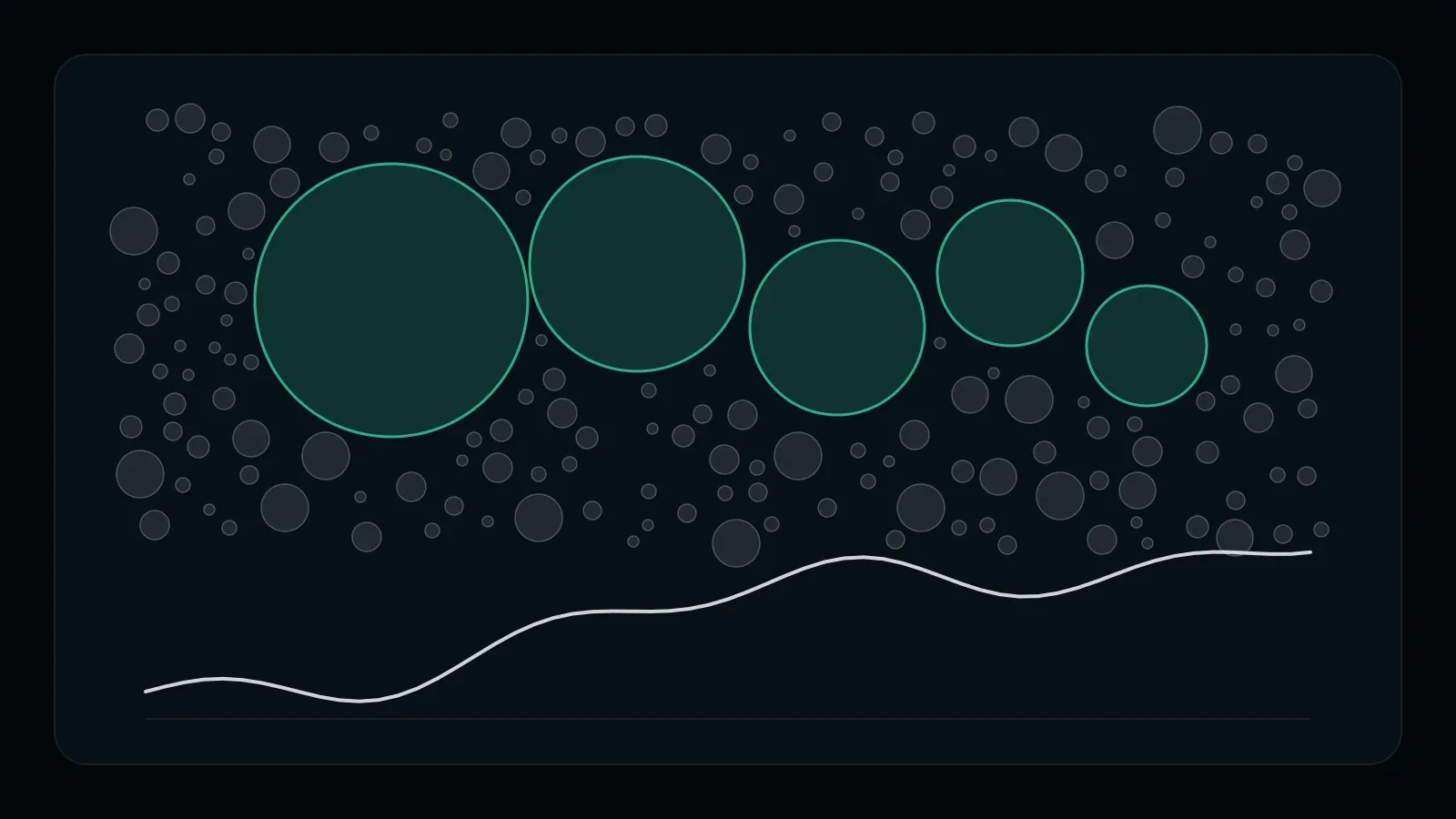
That leads to the feature people most often miss. The S&P 500 is not 500 equal slices. As of 30.06.2026 the ten largest companies made up 36.4% of the index. When a handful of the largest tech companies fall, the index falls with them, even if hundreds of other stocks stand still.
The index belongs to the S&P family of US indices and does not overlap with the S&P MidCap 400 or S&P SmallCap 600: mid and small companies are not in it. Small companies have their own indices, such as the Russell 2000 from FTSE Russell.
How do companies get into the S&P 500?
The composition is decided by the S&P Dow Jones Indices committee. Formal criteria screen out companies that do not fit, but the committee has the final say: meeting the rules does not guarantee inclusion. The conditions under the methodology as of 30.06.2026:
- A US company whose common shares trade on an eligible US exchange. ETFs, closed-end funds and depositary receipts (ADRs) are excluded; REITs are allowed.
- Unadjusted market capitalisation of USD 22.7 billion or more, and a float-adjusted capitalisation of at least half that threshold. The threshold is reviewed, so check the methodology for the current figure.
- An investable weight factor (IWF) of at least 0.10.
- Positive as-reported earnings in the latest quarter and in the sum of the latest four quarters.
- Adequate liquidity: annual dollar value traded of at least 0.75 of float-adjusted capitalisation, and at least 250,000 shares traded in each of the six months before the review.
- Sector balance: each sector's weight in the index is compared with its weight in the market.
Companies leave the index after a takeover, a bankruptcy or when they stop meeting the criteria, and new ones take their place.
How do you invest in the S&P 500?
The index is a calculated figure, so you cannot buy it as an asset. You can buy an instrument that holds its constituents or tracks its value.
| Instrument | How it works | Costs | Main risk |
|---|---|---|---|
| ETF | the fund holds the index stocks, its units trade on an exchange like a share | fund fee, broker fee, spread | market and currency |
| Index fund (mutual fund) | units are bought from the fund manager at the end-of-day price | fund fee, sometimes entry and exit charges | market and currency |
| Index futures | a contract on the index value with an expiry date | commission, contract roll, margin requirements | leverage: losses can exceed the margin |
| CFD | a contract with a broker on the price difference | spread, overnight financing | leverage and the broker's own risk |
The best-known US ETFs on the index are SPY (State Street), IVV (iShares) and VOO (Vanguard); issuer pages checked 25.10.2026. For European investors, issuers offer ETFs under the European UCITS rules, which trade on European exchanges. Which of them you can buy depends on your broker and your country.
Futures and CFDs are a different class of instrument. With leverage, the loss is counted on the whole position, not on the margin, and the position can be closed by force. How that works is covered in the article on leverage and liquidation.
How risky is investing in the S&P 500?
The index holds hundreds of companies, but they are still stocks, and investing in them carries the risk of losing money. In 2022 the index lost 19.44% excluding dividends (S&P DJI factsheet as of 30.06.2026). A fall can be deeper, and getting back to the previous high can take years. Past index results do not guarantee future ones.
What to weigh before buying:
- Depth of the drawdown. Judge not the average return but how far a fall you can sit through and for how long. How to measure it is explained in the article on maximum drawdown.
- Horizon. The sooner you may need the money, the higher the chance of selling into a fall.
- Concentration. A third of the index is ten companies, so "500 companies" does not mean "500 equal bets".
- Currency. The index is calculated in dollars. If you count your money in hryvnia or euros, the result also depends on the exchange rate.
What should an investor from Ukraine consider?
There is no special "Ukrainian" way to buy the index: access comes from a broker that offers the right ETF or contract. Before opening an account, check four things.
- Currency rules. Whether you can transfer money to a broker abroad is set by the current rules of the National Bank of Ukraine. Check them on the NBU website on the date of the transfer: under martial law the rules change.
- The broker and its supervisor. Find out where the broker is registered, who regulates it and how client securities are held.
- Taxes. Income from foreign securities is taxed under the rules of your country of residence. In Ukraine, check the State Tax Service reference resource (zir.tax.gov.ua) before the deal.
- Costs. Add up the fund fee, the broker fee, the spread and the currency conversion charge. On small amounts these costs add up.
If you are comparing the index with other options, see the overview of where to invest money and the guide to gold bars as a defensive asset with different costs.
How do you follow the companies in the index?
The largest companies in the index report four times a year, and their share reaction to results moves the whole index. Report dates and times, analyst expectations and how the price reacted to past reports are shown in the Sufics earnings calendar. This is data for understanding the market, not a trading signal.
Sufics works with US stocks and indices as part of its managed accounts, but this article is not an offer or advice. If you are thinking of handing money to a manager, first go through the checklist in the article on how to check a fund manager.
Investing in stocks and index instruments carries the risk of losing money; their value can fall, and no one can guarantee the result. This article explains how the index works and is not investment advice.
Key takeaways
- The index is weighted by market capitalisation: as of 30.06.2026 ten companies made up 36.4% of it.
- You cannot buy the S&P 500 directly: ETFs, index funds, futures and CFDs give exposure, each with its own costs and risks.
- The index can fall by tens of percent and take years to regain its high, and investors outside the US also carry currency risk.
Frequently asked questions
What is the S&P 500 in simple terms?
It is a figure that reflects how the value of the largest publicly traded US companies changes on average. Large companies move it more than small ones, because the weight depends on market capitalisation.
How does an S&P 500 ETF differ from an index fund?
ETF units trade on an exchange during the day at the current price. Units of a mutual index fund are bought from and sold to the fund manager at the end-of-day price. The holdings can be the same; the way you buy and the costs differ.
Do investors receive dividends from the S&P 500?
Companies in the index pay dividends to shareholders, and a fund that holds those shares receives them. Some funds pay dividends out to unit holders, others reinvest them. The fund's own documents say which.
How much money do you need to start investing in the S&P 500?
The minimum is set by the broker and the price of one ETF unit, and some brokers sell fractional units. On small amounts, fixed broker fees and currency conversion charges weigh more.
Can you lose money investing in the S&P 500?
Yes. The index can fall by tens of percent and take a long time to recover, and with leverage in futures or CFDs the loss can exceed the margin you put in. Past results do not guarantee future ones.